
The Biggest Faith Issue
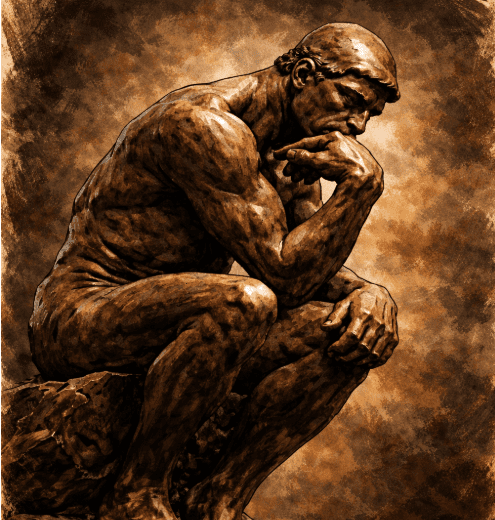
After 35 years of ordained ministry, something has become increasingly clear to me. Recently, after another conversation with someone whose life journey has drifted away from the church, I was reminded again of what may be the greatest stumbling block to faith—and certainly to remaining part of a congregation: our circumstances and reasoning override God’s Word. By “God’s Word,” I mean the promise and good news revealed through God’s saving work, culminating in the life, death, and resurrection of Jesus of Nazareth.

This override is understandable of course. The brokenness of the world is real, and at times it is overwhelming. Sometimes the hurt comes from people we trusted—people who were supposed to take the higher road. Sometimes it comes through grief and loss. Sometimes the church or a pastor lets us down. Sometimes it comes through our own moral failures or limitations. Sometimes from the sheer suffering we see in the world. Our circumstances are powerful, and they inevitably shape how we see life and faith. I admit that I wrestle with some of the same questions myself.
As a pastor, this raises an important question: What does one say when circumstances and intellect seem to contradict the promises of God? What do we do when we just can’t figure things out?

Before I answer that, let me share a sadness. In my experience, I probably only get about a one-in-five chance to have this conversation with someone whose circumstances and intellect have pushed them away from the church. Many people simply drift away. Even those who grew up in the church—or sometimes even members of my own congregation—quietly disengage. Perhaps they assume there is no answer. Perhaps they simply move on with life. Perhaps they assume their pastor will be judgmental. In our busy world, with so many voices competing for our attention, disengaging from the church is easy to do. Nevertheless, when I get a chance, this is what I offer.

First, I don’t tell people to shut off their brains and “just believe.” Faith is not quite that simple. Nor do I want to give the impression that I rush to an “answer.” Most often I spend a great deal of time simply listening, because there is usually significant hurt involved. Nevertheless, when needed, I will engage the difficult question of theodicy—wrestling with how a God who is all-powerful and wholly good can allow such evil and brokenness in the world. There are thoughtful responses and intellectual approaches that can help us think through this problem. Yet in the end, they can only take us so far and ultimately prove insufficient.
After 62 years of my own Christian journey and 35 years of pastoral ministry, I would humbly suggest that the real issue lies in our approach and where we look for an answer. What if the answer is not found in our ability to “figure it out”? What if those of us who find ourselves in the pit cannot reason or muscle our way out of our predicament, no matter how hard we try? What if the answer begins instead with our need for a Word spoken to us from outside ourselves—a Word that addresses us, meets us in our struggle, and gives us a promise we could never produce on our own?
Here is the question: Do we ultimately trust our own intellect, or do we trust what happened 2,000 years ago in the life, death, and resurrection of Jesus of Nazareth? That event comes with a promise—a promise of God’s goodness, love, forgiveness, and mercy. Our circumstances often seem to contradict that promise, leaving us with the dilemma of where we look and to whom we listen. Will we let the Gospel, a word and promise that comes to us from outside ourselves or our circumstances have the ultimate say. It comes down to trust. Do we trust the promise that God is with us and for us, or our reasoning and striving?
Of course, this does not explain why there is evil in the world or why tragedy happens. I am reminded of something Joni Eareckson Tada said after the accident that left her a paraplegic: “At some point I had to stop asking ‘Why?’ and start asking, ‘What am I going to do about it?’” Yet I would suggest that something important happens between those two questions—between the “why” and the “what am I going to do about it.”

In between—and at the very foundation of our ability to keep joyfully living in the face of brokenness and evil—is a gracious promise to which we may cling. This is why Easter is such a big deal. Christ raised from the dead confirms both his pre-Easter claims and post-Easter promises. As Scripture says: “Thus it is written that the Christ should suffer and on the third day rise from the dead, and that repentance for the forgiveness of sins should be proclaimed in his name to all nations.” Easter means that we are given a promise of God’s goodness and mercy—a promise spoken to us from outside ourselves.
This is what I would offer to anyone who struggles to believe: Of course we struggle. We do not have it within ourselves to simply believe or think our way into faith. We are certainly meant to use our minds—our intellect is after all, a gift from God. Yet, we should not place more trust in our reason than in the Gospel. God loves us so much that he has placed into our lives a promise to hold onto—even in the face of death. That promise says, “Even though we die, yet shall we live.” Cling to this promise. One day God will clear up all the questions. As the Apostle Paul wrote, “Now we see in a mirror dimly, but then we shall see face to face.”
This, finally, is what I have to offer: God in Christ has broken into our struggle, suffering, and sin and given us a sure promise to hold onto—even when the chips are down and we confront so many things that seem to contradict God’s almightiness and goodness. Trust the promise! Trust the self-revelation of God in the person and work of Christ. Bob Dillon’s famous song “You Gotta Serve Somebody” is true. However, the ultimate truth is that you gotta trust somebody or something. So in this moment, as in every moment of life, I proclaim to you, the God-man Jesus of Nazareth. Trust him! Trust his promise more than your own reasoning and more than your ability to make sense of things. Don’t let your circumstance or reasoning power override the Gospel!
Giving this external word is also the mission of God’s earthly and fallible instrument in the world that we call the church and this is why the enemy of faith will do just about anything to severe us from the promise giving ministry of Word and Sacrament of the church.
