
Foretaste of the Sermon to Come
A little nibble of the Revised Common Lectionary
Sunday’s scriptures are Isaiah 52:7-10, Hebrews 1:1-4 and John 1:1-18

As I write this late on Christmas Eve, I am thinking about last Sunday’s Gospel and how it relates to Christmas Day’s Gospel of John. Matthew 1:18-25 tells the story about how an angel of the Lord came to Joseph in a dream and told him not to worry about accepting Mary and her baby, not genetically his, that she was carrying. This baby is the prophesied shoot from the stump of Jesse, the promised Messiah from King David’s line.
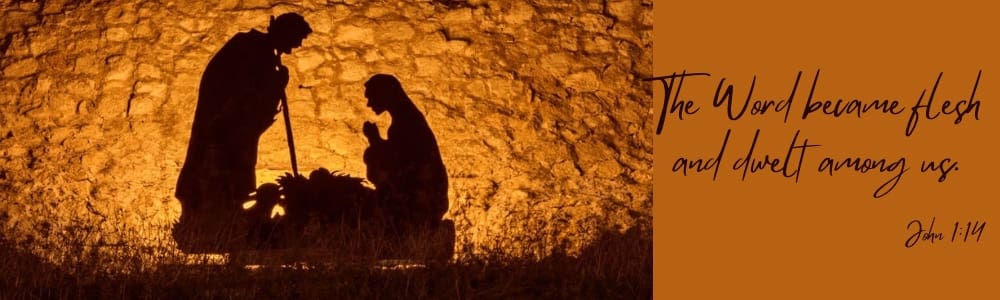
In the first words of his first chapter, John tells us who Jesus is in his spare and poetic imagery. The Word has always been, has always been with God and has always been God. This Word became flesh and in his flesh became the image of the invisible God. This Word would dwell among humanity instead of being accessible only to those high priests who could enter the Holy of Holies.
Both of these stories are nativities. Matthew’s is organic with a glimpse of the cosmic. It tells about the baby to come. It tells of God’s enfleshment — his earthly residence in the body of a gurgling baby, the infinite entering the finite. On the other hand, John’s is cosmic with a glimpse of the organic. He starts in eternity, which has no beginning. But when God created time, his creative voice, his Word, spoke the universe into existence and then became flesh so that in his fullness he could gift humanity grace upon grace.
Where else do the cosmic and the organic meet? This is sacramental theology, heaven breaking into time and space. A finite earthly element alongside God’s infinite Word, resulting in pure promise. Bread and wine. A baby. Water. Add them to the Word and you get nothing less than salvation. Thanks be to God.
